Storm & Hail Damage Roof Repair
Hurricanes, tornadoes, high wind, hail and fallen trees: we inspect, document and repair storm-damaged roofs for homeowners in Harnett, Wake, Durham, Johnston, Cumberland, Lee, Wayne, Pitt, Greene, Orange, Chatham and Sampson Counties.
When Storms Hit, We’re Here to Help
North Carolina weather can turn quickly. One afternoon thunderstorm, a tropical system moving inland or a single falling limb can leave your roof vulnerable to leaks and further damage. Salvation Roofing provides free storm damage inspections, clear photo documentation and quality repairs or replacements, so your home is protected again as quickly as possible.
Types of Storm Damage We Repair
Hurricanes and tropical storms
Hurricane remnants and strong storms regularly push damaging wind and days of heavy rain into our part of North Carolina. Long periods of wind-driven rain can force water under shingles and around flashing, and sustained gusts can tear shingles and ridge caps loose.
High wind
Strong straight-line winds from thunderstorms can lift shingle edges, break the adhesive seal strips that hold shingles down and peel back sections of roofing. Once a shingle is lifted, the next storm can remove it entirely.
Hail
Hail can knock off the protective granules on asphalt shingles, bruise or crack the shingle mat and dent vents, flashing and gutters. Hail damage is often hard to see from the ground but can shorten your roof’s life and lead to leaks over time.
Heavy rain and flooding
Torrential rain tests every weak point on a roof. Worn flashing, cracked pipe boots, clogged gutters and missing shingles let water into the decking, insulation and ceilings. Overflowing gutters can also send water behind fascia boards and into walls.
Ice and winter storms
Winter storms are less common here than in the mountains, but freezing rain and ice can weigh down tree limbs and power lines, and ice buildup at roof edges and gutters can force water back under shingles as it melts.
Fallen trees and limbs
Mature trees are part of what makes our area beautiful, but a falling tree or heavy limb can crack rafters, puncture decking and leave a hole open to the weather. Stay clear of any area with downed power lines and call professionals to remove trees from the roof. If the tree also came down on your deck, our deck repair service covers that too.
Lightning
A lightning strike can damage shingles, chimneys and roof vents and can start a fire in the attic. If you suspect lightning hit your home or smell smoke, get everyone out and call 911 first. Once the fire department says it is safe, we can inspect the roof.
Heat, UV and humidity
Not all storm damage happens in a single day. Long, hot North Carolina summers, intense sun and high humidity slowly dry out shingles, encourage algae growth and weaken sealants, which makes roofs more vulnerable when the next big storm arrives. Regular roof maintenance helps your roof stand up to severe weather.
Tornado Damage: When Storms Get Severe
North Carolina gets tornadoes, most often in spring, and they can also spin up in the outer rain bands of hurricanes and tropical storms as they move inland. Even a brief, weak tornado can do far more damage than a typical thunderstorm.
- Severe structural damage: sections of roof can be lifted, shifted or torn away, and walls or rafters may be weakened.
- Roof decking torn off: high winds can peel shingles and strip the plywood or OSB decking down to the rafters, leaving the home open to rain.
- Debris impact: flying limbs, siding and debris can puncture the roof, crack decking and damage gutters, vents and flashing.
After a tornado, safety comes first. Stay out of any structure that may be unsafe, keep clear of downed power lines and follow local emergency officials. When it is safe, photograph the damage from the ground and call us. We can inspect the roof, help with temporary protection where it is safe to do so, document the damage with photos and prepare a repair or replacement estimate for your insurance claim. Your insurance company determines coverage.

Signs Your Roof May Have Storm Damage
- Missing, cracked, creased or lifted shingles
- Shingle granules collecting in gutters or at downspouts
- Dents or dark spots on shingles, vents, flashing or gutters (possible hail)
- Exposed or damaged roof decking
- Bent or loose flashing around chimneys, walls and vents
- Tree limbs or debris on the roof
- New leaks, water stains on ceilings or damp attic insulation
- Sagging gutters or water overflowing during rain
What storm and wind damage can look like


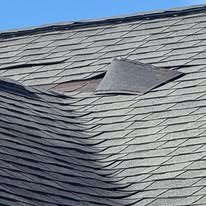
Photos from roofs our team has inspected.
What Does Hail Damage Look Like on a Roof?
Hail damage usually shows up as dark, round spots where the granules were knocked off the shingles, often with a soft or bruised feel underneath. It tends to be scattered across the slopes that faced the storm rather than in one spot.
- Granule loss: dark or shiny patches where the shingle’s mat shows through, and piles of granules at downspouts
- Bruises and cracks: soft spots that give when pressed, or circular cracks in the shingle surface
- Dents in metal: dings on vents, flashing, gutters, downspouts and window wraps, which are often easiest to see from the ground
- Split or broken shingles after large hail
- Damage nearby: dented cars, siding or mailboxes and torn screens point to hail strong enough to harm a roof
Hail bruises can be hard to tell apart from normal wear or blistering, and they rarely leak right away. Please don’t climb on the roof yourself. We inspect it, photograph what we find and explain whether it looks like hail damage, normal aging or both.
What to Do After a Storm
- Make sure everyone is safe. Stay away from downed power lines and stay out of any part of the home that may be unsafe.
- Do not climb on the roof. Wet or damaged roofs are dangerous.
- Take photos from the ground of any visible damage, debris and interior leaks, with dates.
- Protect your belongings by moving items away from leaks and using buckets or towels.
- Contact your insurance company promptly if you plan to file a claim, and keep receipts for any temporary repairs.
- Call Salvation Roofing at (919) 628-3285 for a free storm damage inspection.
How Salvation Roofing Helps
- Free inspection: we inspect shingles, flashing, vents, decking, gutters and attic areas for storm damage.
- Temporary protection: where it is safe to do so, we can help protect exposed areas to limit further water damage.
- Photo documentation and estimate: clear photos and a detailed repair or replacement estimate you can share with your insurer. See insurance claims assistance.
- Quality repairs or replacement: from targeted roof repairs to a full roof replacement, plus gutter repairs, done with quality materials.
- Clean-up: we protect your yard and remove storm and job-site debris when the work is done.
Planning to file a claim? Our roof insurance claim page explains how documentation, adjuster visits and coverage decisions work.
Have more questions? Visit our roofing FAQ or see local storm information for towns like Fayetteville, Sanford, Smithfield and Dunn.
Storms often damage walls too. Our inspection also checks fascia, soffit and siding; see storm and hail siding repair.
From a Google review
“Charles is very quick to respond and very helpful. … His workers worked really hard and finished the work under a 95 degree heat just to complete the work in a day. Our roof looks amazing!!!”
Storm Damage Repair FAQs
What should I do if a tornado damaged my roof?
First make sure everyone is safe, stay out of any structure that may be unsafe and keep away from downed power lines. When it is safe, take photos from the ground, protect belongings from rain if you can, contact your insurance company and call Salvation Roofing at (919) 628-3285. Tornadoes can tear off shingles and decking and cause debris damage, so we will inspect the roof, document what we find and prepare an estimate. Your insurer decides coverage.
What should I do right after a storm damages my roof?
Make sure everyone is safe, take photos of any visible damage from the ground, protect belongings from leaks, and call us for an inspection. If you plan to file a claim, contact your insurance company promptly and keep records of any temporary repairs.
Can a storm damage my roof even if I can’t see anything from the ground?
Yes. Hail bruising, lifted shingle edges, broken seal strips and loose flashing are often invisible from the ground but can lead to leaks later. A free professional inspection after a major storm is the safest way to know.
Does hail damage really matter if my roof isn’t leaking?
It can. Hail can knock granules off shingles and bruise the mat underneath, which speeds up wear and can shorten your roof’s life even if it doesn’t leak right away. Documenting hail damage soon after the storm also helps if you decide to file an insurance claim.
Should I get on my roof to check for damage?
No. Wet, damaged or steep roofs are dangerous. Take photos from the ground and let a professional inspect the roof safely.
Can you help with my roof insurance claim?
Yes — with insurance claim assistance from our roofing crew. We inspect your roof for storm damage, take detailed photos and prepare a repair estimate you can share with your insurance company to document the damage. With your permission, we can be at the adjuster’s inspection to point out the damage we documented. Your insurance company makes all coverage and approval decisions.
Want a Ballpark Price First?
Start with a free instant roof estimate online, then we’ll confirm everything with a free on-site inspection.